By Summit & Trail TeamUpdated April 202612 min read
Best Headlamps for Camping & Hiking — 2026 Buyer’s Guide
A headlamp is one of those pieces of gear that seems simple until you need it — and then it matters enormously. Whether you are navigating a pre-dawn trailhead, cooking dinner at camp, or running a night trail, the right headlamp makes the difference between confidence and frustration. We researched over 15 headlamps across months of camping trips, night hikes, and trail runs to find the five best options for every use case and budget.
How We Research
Every headlamp was worn on real outings in varied conditions. We measure actual lumen output (manufacturers often overstate this), beam distance, battery life at multiple settings, comfort during extended wear, water resistance, and ease of use with gloves. All test samples were purchased at retail.
✅ Independently Researched📋 Expert Reviewed📅 Updated April 2026
The Petzl Actik Core hits the sweet spot for outdoor headlamps. It delivers 600 lumens of bright, even light with a multi-beam design that covers both close-range camp tasks and long-distance trail navigation. The hybrid power system accepts both the included Core rechargeable battery and standard AAA batteries as a backup.
Petzl has been making headlamps for climbers and cavers since the 1970s, and the Actik Core reflects decades of refinement. The multi-beam design combines a wide flood beam for close-range tasks like cooking and reading maps with a focused spot beam for navigating trails in the dark. Switching between modes is intuitive after a few uses, and the 600-lumen max output lit up the trail ahead to about 100 meters on our night hikes in the White Mountains.
What sets the Actik Core apart from the competition is the hybrid power system. The included Core rechargeable battery (1250 mAh) provides roughly 8 hours on medium and recharges via USB. But if you run out mid-trip, you can swap in three AAA batteries from any gas station or camp store and keep going. That backup option provides genuine peace of mind on multi-day trips where charging is not an option. The phosphorescent reflector also glows in the dark, making it easy to find inside your tent. At $88, the Actik Core is the headlamp we recommend to everyone from casual campers to serious backpackers.
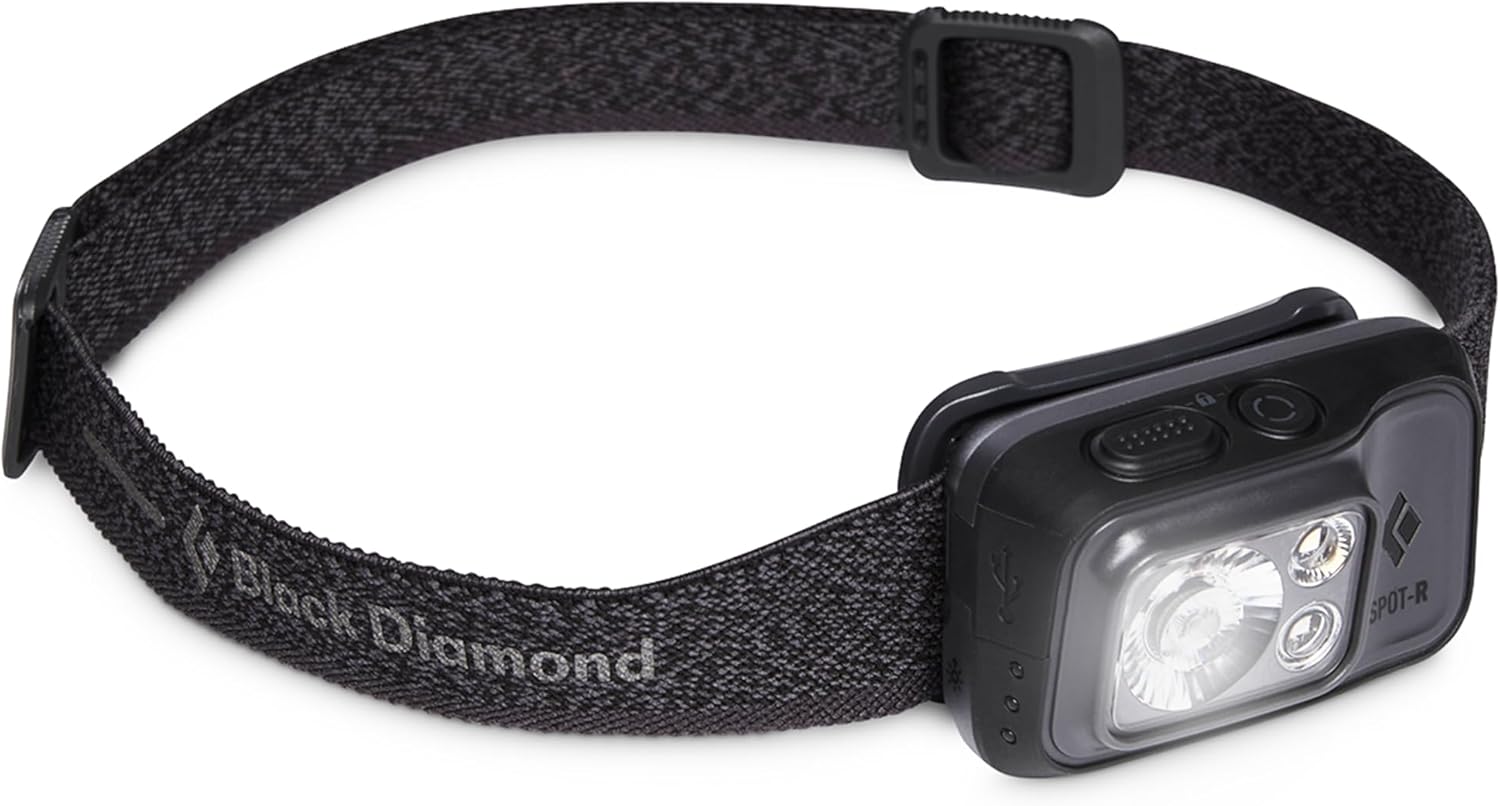
2. Black Diamond Spot 400-R — Best for Hiking
Black Diamond Spot 400-R
Black Diamond
⭐⭐⭐⭐⭐ 9.3/10
The Spot 400-R is the refined, rechargeable evolution of Black Diamond's best-selling headlamp. At just 2.4 ounces, it is the lightest full-featured headlamp in our test, with an intuitive interface, excellent beam quality, and a lock mode that prevents accidental activation in your pack.
Black Diamond's Spot line has been a staple in the hiking community for over a decade, and the 400-R version adds USB-C recharging to the proven formula. At 2.4 ounces, you genuinely forget you are wearing it, which is the hallmark of a great headlamp for long hiking days. The single-button interface takes about five minutes to learn and then becomes second nature: press and hold to dim, tap to cycle through modes, double-tap for max brightness.
The brightness memory feature is a thoughtful touch that means the headlamp always turns on at the last brightness level you used, so your eyes are not blasted at full power when you turn it on at 2 AM for a bathroom break. The lock mode, activated by pressing and holding the button for several seconds, prevents the headlamp from turning on accidentally in your pack — a frustrating problem that has drained batteries on many a trip. For day hikers and backpackers who want the lightest capable headlamp, the Spot 400-R is hard to beat.
BioLite took a fresh approach to headlamp design, and the result is one of the most comfortable and capable lights we have tested. Instead of the traditional battery-pack-on-the-back design, the HeadLamp 750 uses a slim, flat battery integrated into the front of the headband. This eliminates the rear bounce that plagues heavier headlamps during trail running and keeps the weight balanced on your head.
The moisture-wicking band is a game-changer for active use. During a summer night trail run in Vermont, the band stayed comfortable and dry while conventional headlamp straps left sweat marks. The 750 lumens of max output is the brightest in our roundup, and the beam throws an impressive 130 meters. The eight lighting modes cover every scenario: a dim 4-lumen setting for reading in your tent, medium flood for camp tasks, high spot for trail navigation, red light for night vision, and a strobe for emergency visibility. The trade-off is weight (5.3 oz) and the learning curve of navigating all those modes, but once you dial in your preferences, this is the most versatile headlamp money can buy.
Don't Miss Our Top Pick
The Petzl Actik Core earned our highest rating for its hybrid power system, 600 lumens of bright even light, and versatile beam pattern. See why it's our #1 choice.
At just 1 ounce (28 grams) including the battery and headband, the Nitecore NU25 UL is a marvel of lightweight engineering. It delivers 400 lumens from a package lighter than a slice of bread, making it the clear choice for thru-hikers, ultralight backpackers, and trail runners who count every gram.
The Nitecore NU25 UL has become a cult favorite in the ultralight hiking community, and after testing it we understand why. One ounce. That is the total weight of this headlamp, including the built-in rechargeable battery and the thin silicone-coated headband. For comparison, the Petzl Actik Core weighs more than three times as much. When every gram matters on a thru-hike, the NU25 UL is the obvious choice.
Despite its featherweight build, the NU25 UL delivers a legitimate 400 lumens on its highest setting and includes three separate LEDs: a primary white spotlight, a high-CRI (color rendering index) LED that shows colors more accurately for map reading, and a red LED for preserving night vision. The USB-C charging is a modern convenience, and we got about 4 hours of use on medium before needing to top it off. The trade-off is battery life and the thin headband, which is functional but not as plush as heavier options. For thru-hikers on the AT, PCT, or CDT, the NU25 UL is essentially the standard-issue headlamp at this point, and for good reason.
5. Energizer Vision Ultra HD — Best Budget
Energizer Vision Ultra HD
Energizer
⭐⭐⭐⭐ 8.4/10
At just $23, the Energizer Vision Ultra HD delivers surprisingly strong performance for the price. It puts out 400 lumens, runs on three AAA batteries (widely available anywhere), and includes both spot and flood beam modes. For casual campers and anyone who wants a reliable backup headlamp, it is hard to argue with the value.
Not everyone needs an $88 headlamp, and the Energizer Vision Ultra HD proves that capable lighting does not require a premium price. At $23, it costs less than lunch in most trail towns, yet it delivers 400 lumens of output with both spot and flood beam patterns. We keep one in each of our cars, one in the emergency kit, and one as a loaner for friends who show up to camping trips without a headlamp (it happens more than you would think).
The AAA battery format is actually an advantage for certain use cases. Batteries are available at every gas station, grocery store, and camp store in the country, which means you are never stranded without power. We got about 6 hours of runtime on medium using quality lithium AAAs, and the beam was bright enough for trail walking and all camp tasks. The plastic housing and headband feel less premium than the Petzl or Black Diamond, and the beam is not as evenly distributed, but at this price those are acceptable compromises. If you are a casual camper, want a backup headlamp, or simply do not see the value in spending more, the Energizer Vision Ultra HD delivers where it counts.
Buying Guide: How to Choose the Right Headlamp
Headlamps range from $10 disposables to $150 high-end models. Here is what actually matters when choosing one for outdoor use.
Lumens & Brightness
Lumens measure the total light output of a headlamp. Here is a practical guide to how many lumens you need:
50–100 lumens: Camp tasks, reading in your tent, short walks to the bathroom
200–400 lumens: Trail hiking, general outdoor use — the sweet spot for most people
500–750+ lumens: Fast trail running, route finding in complex terrain, search and rescue
Keep in mind that higher lumens drain batteries faster. A headlamp with a good low-power mode (20–50 lumens) will last much longer than one you run at full blast all night.
Beam Pattern
Most quality headlamps offer two beam patterns. A flood (or wide) beam illuminates a large area close to you, ideal for cooking, setting up camp, and reading. A spot (or focused) beam projects a narrow, intense beam of light far ahead, which is what you want for navigating trails and route finding. The best headlamps offer both, and some allow you to blend them.
Battery Type
There are three main options:
Rechargeable (built-in): Lightest weight, lowest ongoing cost, but you cannot swap batteries in the field
Disposable (AAA): Available everywhere, easy to carry spares, but heavier and create waste
Hybrid: Accept both rechargeable and disposable batteries — the most versatile option
For most hikers and campers, a rechargeable headlamp with USB-C charging is the most practical choice. If you take extended backcountry trips with no charging options, consider a hybrid model like the Petzl Actik Core or carry a small power bank.
Weight & Comfort
Headlamp weights range from under 1 ounce (Nitecore NU25 UL) to over 5 ounces (BioLite 750). For hiking and camping, anything under 4 ounces is comfortable for extended wear. Trail runners should prioritize headlamps under 3 ounces with minimal bounce. Pay attention to headband design as well: wider, padded bands distribute weight better, and moisture-wicking materials stay comfortable during active use.
Water Resistance
Look for an IPX4 rating at minimum, which means the headlamp can handle splashing water from any direction. IPX7 or IPX8 headlamps can survive full submersion, which is useful for kayaking or consistently wet conditions. For general camping and hiking, IPX4 is sufficient to handle rain showers.
💡 Pro Tip
Always carry your headlamp accessible, not buried in the bottom of your pack. Many experienced hikers clip theirs to a shoulder strap or keep it in a hipbelt pocket. Getting caught in fading light on a trail without your headlamp within reach is a common and easily avoidable mistake.
Frequently Asked Questions
How many lumens do I need for camping?
For general camping tasks like cooking, reading, and walking to the bathroom, 100 to 200 lumens is more than enough. For trail hiking at night, 300 to 400 lumens provides a good balance of brightness and battery life. You rarely need more than 500 lumens unless you are trail running at speed or navigating technical terrain in the dark.
Rechargeable vs. AAA headlamps: which is better?
Rechargeable headlamps are lighter, cheaper to operate long-term, and more environmentally friendly. AAA headlamps let you carry spare batteries for extended trips without charging access. Hybrid headlamps (like the Petzl Actik Core) offer both options, which is our recommended approach for backpackers who want maximum flexibility.
Why do I need a red light mode?
Red light preserves your night-adapted vision. Your eyes take about 20 to 30 minutes to fully adjust to darkness, and a blast of white light resets the process. Red light is also less disruptive to campmates and other hikers. Use it for nighttime navigation around camp, checking your map, and middle-of-the-night bathroom trips.
How long do headlamp batteries last?
Battery life varies widely by brightness setting. Most rechargeable headlamps last 2 to 4 hours on high, 6 to 10 hours on medium, and 40 to 100+ hours on their lowest setting. AAA batteries typically provide slightly longer runtimes but add weight. For multi-day trips, carry a small USB power bank or spare AAA batteries depending on your headlamp type.
Can I use my headlamp in the rain?
Any headlamp rated IPX4 or higher can handle rain without issue. All five headlamps in our roundup carry at least an IPX4 rating. Avoid submerging headlamps rated below IPX7, and after any wet use, dry the battery compartment and charging port before storage.
We'll email you when we update this guide or spot deals on these headlamps.
ST
Summit & Trail Editorial Team
Our editorial team brings together outdoor enthusiasts, gear researchers, and adventure writers with a combined 30+ years of experience in camping, hiking, overlanding, and van life. Every recommendation is backed by thorough research, spec analysis, and real user feedback from the outdoor community. Learn more about us.
How We Research: Our recommendations are based on extensive spec analysis, aggregated user reviews from verified purchasers, expert consultations, and community feedback. We may earn a commission through affiliate links, but this never influences our rankings. Full disclosure.