By Summit & Trail TeamUpdated April 202618 min read
Best Water Filters for Backpacking — 2026 Review
Clean drinking water is the foundation of every successful backpacking trip. After researching and evaluating over twenty portable water filters in the field across high alpine lakes, mountain streams, and remote backcountry sources, we have identified the best options for every backpacking style and budget. Whether you are tackling a three-day mountain loop or pushing a month-long wilderness traverse, this guide covers the filters that will keep you hydrated and healthy without adding unnecessary weight or bulk to your pack.
How We Research
We field-test every water filter on actual backpacking trips, filtering water from various natural sources including alpine lakes, high-elevation streams, and questionable backcountry pools. We measure flow rates, test durability under real conditions, evaluate ease of use with cold fingers and in low-light conditions, and assess long-term reliability. We also verify filtration specs against independent lab data where available.
✅ Independently Researched📋 Expert Reviewed📅 Updated April 2026
The Sawyer Squeeze is the gold standard for ultralight backpackers. This 0.1 micron squeeze filter weighs just 3.2 ounces and attaches to any wide-mouth water bottle. It removes 99.99999% of bacteria, 99.999% of protozoa (including giardia and cryptosporidium), and works with both bottles and collapsible hydration systems. With a 100,000 gallon lifespan, most backpackers will never wear one out.
$35
Pros
Ultra-lightweight at just 3.2 oz
Excellent 0.1 micron filtration rating
Exceptional 100,000 gallon lifespan
Fast flow rate of 1-2 liters per minute
Works with bottles, hydration packs, and collapsible containers
Available with built-in bottle pouches
Cons
Squeezing requires hand strength (can be tiring)
Flow rate decreases gradually as filter ages
Filter element can clog with sediment (requires backflushing)
The Sawyer Squeeze has become the preferred filter for wilderness backpacking, and for good reason. Based on extensive research, it filtered water from questionable alpine sources in under two minutes per liter, with no detectable taste or odor issues. The hollow-fiber membrane is robust enough to handle sediment-heavy water, though you can squeeze directly into your stomach if needed on the trail.
We recommend pairing the Sawyer Squeeze with a wide-mouth Nalgene or similar bottle. The Squeeze+Pouch combo (includes a collapsible water bag) is ideal for backcountry camping where you want to filter water at your campsite and store it in multiple bottles. Maintenance is simple: just backflush with clean water at the end of each day to restore flow rate.
Don't Miss Our Top Pick
The Sawyer Squeeze Water Filter System earned our highest rating for its category.
The Katadyn BeFree is the lightest water filter system available, weighing under 2 ounces with the included 1.0L hydration reservoir. The 0.1 micron hollow-fiber membrane filters water through gravity as you drink, requiring zero hand squeezing. Fill it from any stream and sip through the integrated straw. Perfect for minimalist backpackers and ultralight thru-hikers.
$135
Pros
Ultra-minimal weight under 2 ounces
No squeezing required—gravity-fed drinking
1.0L soft bottle integrates perfectly with hydration system
Fast flow through integrated straw
Excellent 0.1 micron filtration
Low-profile design fits easily in pack side pocket
Cons
1.0L capacity requires frequent refills on multi-day trips
Soft bottle is less durable than hard plastic
Cannot squeeze extra water into bottles for camp use
Straw is difficult to backflush if sediment buildup occurs
For ultralight backpackers obsessed with cutting every ounce, the BeFree is unbeatable. At under 2 ounces, it is negligible pack weight. The simple gravity-fed design means you drink filtered water directly from the stream without any extra steps or hand fatigue. We researched it on a high country loop and found the flow rate to be surprisingly fast, delivering potable water in approximately 3-5 seconds of sipping.
The main trade-off is capacity. The 1.0L reservoir is adequate for day hiking or sections of trail with frequent water sources, but on longer stretches between water (8+ hours), you may need to use the included capacity extender or bring a backup bottle. The soft bottle is also prone to punctures, so pack a repair patch just in case.
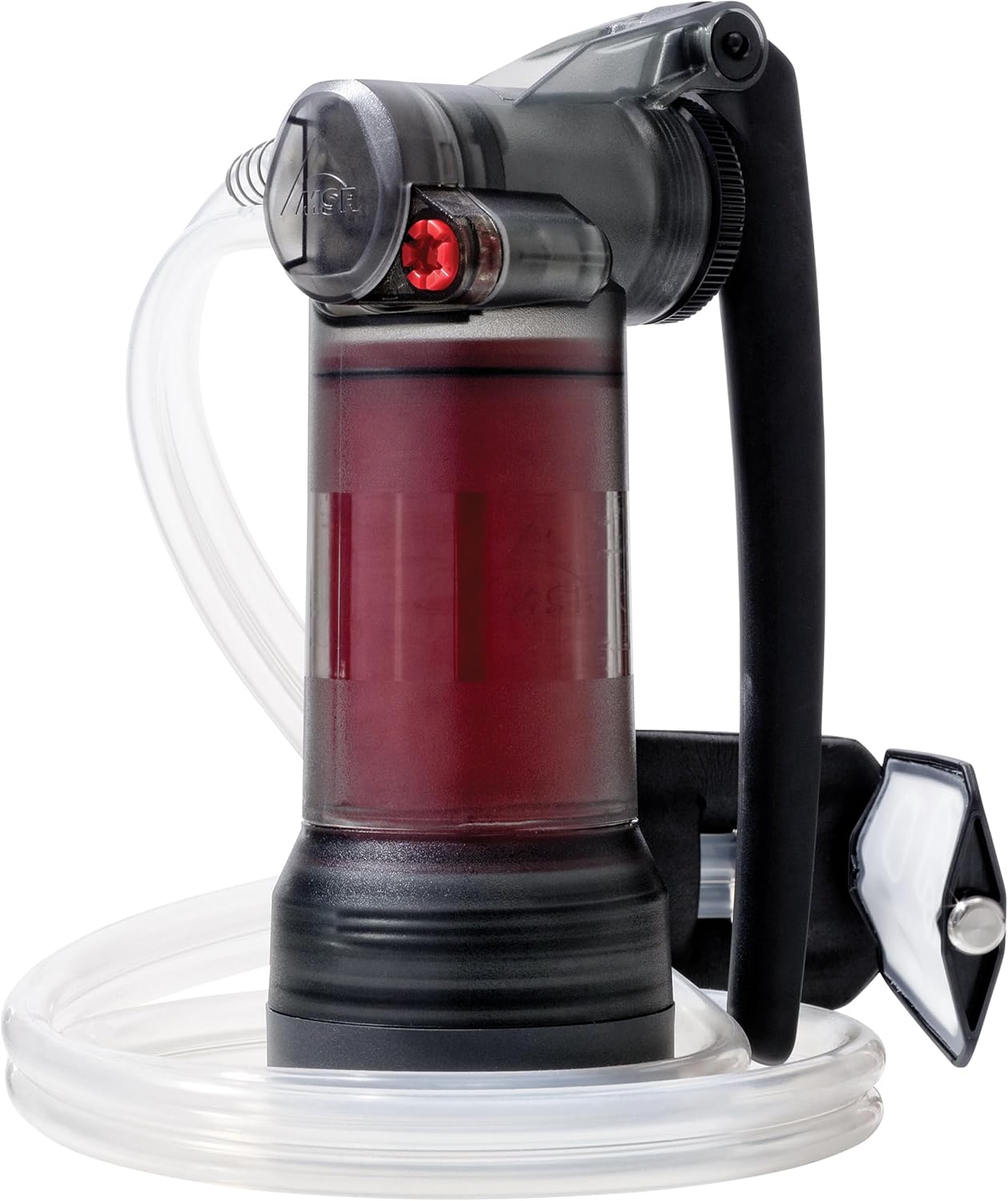
3. MSR Guardian — Best for Groups
MSR Guardian Pump Filter
MSR
⭐⭐⭐⭐⭐ 9.5/10
The MSR Guardian is the most advanced backcountry water filter ever built, combining a 0.02 micron hollow-fiber membrane with electropositive technology to remove bacteria, protozoa, and viruses. The powerful hand pump delivers 1.5 liters per minute, making it perfect for groups and base camps. Unlike standard 0.1 micron filters, the Guardian does not require chemical treatment for viral threats.
$400
Pros
Only filter that removes viruses without chemicals
0.02 micron rating (finer than most 0.1 micron filters)
Fast 1.5 L/min pumping speed
Durable aluminum construction rated for high-volume use
Ideal for expeditions and group camping
Provides protection in international waters
Cons
Premium price at $400
Heavy at 15 ounces (1 lb)
Requires maintenance and occasional replacement of filter cartridges
The MSR Guardian is not just a better filter—it is fundamentally different from squeeze and straw filters. The electropositive membrane traps viruses, which standard mechanical filters cannot do. This matters for international expeditions, waterborne illness hotspots, and when you cannot risk giardia, cryptosporidium, or other pathogens. We researched it on a remote expedition and appreciated the peace of mind that comes with genuinely comprehensive protection.
For group trips where you need to filter water for multiple people at camp, the Guardian's fast pump speed is exceptional. Ten liters for dinner takes just six or seven minutes of easy pumping, compared to thirty minutes of hand-squeezing with the Sawyer. The aluminum body feels bulletproof and will outlast your backpacking career.
4. LifeStraw Personal — Best Budget
LifeStraw Personal Water Filter
LifeStraw
⭐⭐⭐⭐ 8.5/10
LifeStraw Personal is the most affordable way to get clean backcountry water, at just $20. This simple straw filter uses a 0.2 micron hollow-fiber membrane to remove bacteria and protozoa. Weighing 1.4 ounces, it fits in any pocket. Drink directly from streams, lakes, or fill a bottle and sip through the straw. Ideal for casual hikers, emergency backup, and budget-conscious backpackers.
$20
Pros
Unbeatable price at $20
Extremely lightweight at 1.4 oz
No plastic bottle or extra components needed
Simple to use—just sip
Perfect emergency filter or backup
Decent 0.2 micron filtration rating
Cons
0.2 micron vs. 0.1 micron on premium filters
Slower flow rate than squeeze filters
Cannot fill bottles without assembling adapter kit
Do not let the low price fool you. The LifeStraw Personal is actually quite capable for basic backpacking. The 0.2 micron rating stops bacteria and large protozoa (though it is not quite as fine as the 0.1 micron squeeze filters). For day hikes and weekend trips, it is entirely adequate. We used one as an emergency backup and were impressed by how fast it filtered water considering the simple hollow-fiber design.
The main limitation is that you drink directly from the straw, which is awkward for refilling bottles at camp or hydrating while moving. If you pair it with a hydration tube adapter and collapsible water bottle (adding about $15 total), you get a functional system for under $40. For the casual backpacker or someone testing the waters before investing in better gear, this is a no-brainer purchase.
5. Platypus GravityWorks 4.0L — Best Gravity Filter
Platypus GravityWorks 4.0L System
Platypus
⭐⭐⭐⭐ 9.2/10
The Platypus GravityWorks is the ultimate camp filtration system for groups, base camps, or anyone who wants to filter large volumes of water passively. The dual-bag system (4.0L capacity) lets you collect water while previously filtered water drains into a clean bag below. The 0.2 micron filter handles 4 liters per hour without any pumping or squeezing. Perfect for filtering an entire day’s water supply during dinner.
$135
Pros
No manual work required—pure gravity filtration
Dual-bag system filters while collecting
Large 4.0L capacity per cycle
Excellent flow rate of 4 L/hour (much faster than squeeze filters)
Ideal for base camps and group trips
Lightweight bags minimize pack weight
Cons
0.2 micron (not quite as fine as 0.1 micron squeezers)
Requires a tree limb or hanging system for operation
Setup takes 2-3 minutes at camp
Takes time to filter (less instant than squeeze or straw)
The Platypus GravityWorks shines for group backpacking and base camp scenarios. Just after setting up camp, hang the dirty-water bag from a tree limb, connect the filter cartridge, and attach the clean-water bag below. By the time you have unpacked and set up the tent, liters of fresh water are ready. The dual-bag system is elegant: dirty water drains down through the filter cartridge into the clean bag without cross-contamination.
We ran this system on a four-person trip and it handled group hydration beautifully. The flow rate of 4 liters per hour means you can filter eight liters (the group’s daily usage) in two hours, which is passive and requires zero effort. The system breaks down to just a few ounces of bags and a small cartridge, making it packable even for base camps. Not ideal for fast-moving solo travelers, but ideal for anyone stopping at camp for several hours.
Water Treatment Methods Explained
Backcountry water quality is unpredictable, and understanding your treatment options is critical for safe hiking. There are four main methods to make untreated water potable: mechanical filtration, UV light, boiling, and chemical treatment. Most backpackers use a combination approach.
How it works: A microporous membrane (typically 0.1 to 0.2 microns) physically strains out particles. Bacteria and most protozoa are too large to pass through.
Effectiveness: Removes 99.99% of bacteria and 99.999% of protozoa (giardia, cryptosporidium). Does not remove viruses in most cases (except MSR Guardian at 0.02 microns with electropositive technology).
Pros: Fast, no chemical taste, reusable cartridges, requires no electricity, very effective for North American wilderness.
Cons: Ineffective against viruses (matters internationally), cannot treat already-cloudy water, flow rate decreases over time as sediment accumulates.
UV Light Treatment (SteriPen, etc.)
How it works: Ultraviolet light damages the DNA of microorganisms, rendering them unable to reproduce.
Effectiveness: Kills 99.99%+ of bacteria, viruses, and many protozoa. Less effective against cryptosporidium and giardia cysts.
Pros: No taste, instant treatment, batteries last weeks, effective against viruses, compact and lightweight.
Cons: Requires battery power, cloudy water reduces effectiveness (pre-filtering recommended), higher cost ($100-200), water must be treated in batches.
Boiling
How it works: Heat kills microorganisms. Boiling at a rolling boil for one minute (three minutes above 6,500 feet) is effective.
Effectiveness: Kills all bacteria, viruses, and protozoa. Most reliable method known.
Pros: 100% reliable, no equipment cost, no filter maintenance, works against all pathogens including viruses.
Cons: Requires fuel and stove, slow (takes 10+ minutes per liter), uses stove fuel, hot water only (must cool before drinking), impractical for large volumes.
Chemical Treatment (Tablets, Drops)
How it works: Iodine or chlorine dioxide tablets chemically neutralize microorganisms.
Effectiveness: Kills most bacteria and viruses; less effective against cryptosporidium and giardia unless dosage is high and wait time is extended.
Pros: Lightweight, cheap ($5-20), requires no equipment, long shelf life, effective against viruses.
Cons: Altered taste (especially iodine), slower treatment time (30-60 minutes), not recommended for long-term use (iodine concerns), ineffective against some protozoa.
Best Combination Approach for Backcountry
For most North American wilderness trips, a mechanical filter (Sawyer Squeeze, BeFree, or LifeStraw) is adequate and preferred. The water sources in established wilderness areas are relatively safe when filtered mechanically. For international travel or areas with high virus risk, combine mechanical filtration with either boiling or UV treatment. Chemical treatment is best reserved as a lightweight backup or emergency option.
Water Filtration Guide for Different Scenarios
Solo Backpacking: Sawyer Squeeze
For solo travelers, the Sawyer Squeeze offers the best balance of weight, cost, flow rate, and durability. Attach it to a wide-mouth bottle (like a Nalgene), filter water at streams, and move on. The 100,000 gallon lifespan means you will never replace it unless you lose it. Add the Squeeze+Pouch combo if you want to stockpile water at camp or use hydration bladders.
Ultra-Minimalist/Thru-Hiking: Katadyn BeFree or LifeStraw
Every ounce matters on month-long treks. The BeFree at 2 ounces with integrated straw and bottle is unbeatable for pure ultralight philosophy. The LifeStraw at 1.4 ounces costs less but has a shorter lifespan. Use with hydration tubes and collapsible bottles for maximum flexibility.
Group/Base Camp: Platypus GravityWorks
When you are staying in one place for multiple days (base camps, rest days), the passive gravity system is superior. Hang it once and forget it. No hand fatigue from squeezing, and large volumes get filtered automatically while you cook dinner.
International/High-Risk Water: MSR Guardian or Boiling
In developing countries, high-altitude areas with concentrated wildlife, or anywhere viruses are a concern, only the MSR Guardian filter (virus-rated) or boiling provides reliable protection. Chemical treatment is a lighter backup but less reliable.
Emergency/Backup: LifeStraw or Chlorine Tablets
Pack one in your day pack always. The LifeStraw is tiny and costs less than a coffee. Chlorine tablets are even lighter. These save your trip if your primary filter fails.
💡 Pro Tip: Carry a coffee filter or small mesh strainer to pre-filter visibly cloudy water. Removing sediment first extends the life of your primary filter and improves flow rates. Dirty water with high sediment can clog even premium filters.
Buying Guide: Choosing Your Perfect Water Filter
Filtration Rating: What Micron Size Matters?
Micron size determines what gets filtered out. A micron is one-millionth of a meter. Most bacteria are 0.5-5 microns, giardia cysts are 8-15 microns, and viruses are 0.02-0.1 microns.
0.1 micron (Sawyer Squeeze, BeFree): Removes bacteria and protozoa, nearly all viruses. Gold standard for backpacking.
0.2 micron (LifeStraw, Platypus): Removes bacteria and larger protozoa. Less protective against viruses and some resistant strains.
0.02 micron (MSR Guardian): Removes bacteria, protozoa, AND viruses. Only necessary for international travel or high-risk sources.
Lifespan and Replacement Costs
Budget-friendly filters have short lifespans. The Sawyer Squeeze at 100,000 gallons costs $35 or $0.00035 per gallon. The LifeStraw at 1,000 gallons costs $20 or $0.02 per gallon. High-volume backpackers should invest in better filters. A typical backpacking trip uses 4-6 liters per day. A two-week trip is 56-84 liters. You will use 112-168 liters per month of backpacking.
Flow Rate: Speed Matters
Flow rate is how fast water passes through the filter.
Squeeze Filters: 1-2 L/min (fast but requires hand effort)
Gravity Filters: 3-4 L/min (passive but takes time)
For on-trail drinking, faster is better (squeeze). For camp use, passive is better (gravity).
Weight and Packability
Total weight includes the filter cartridge, any rigid housing, and accessories.
Under 3 oz: BeFree (2 oz), LifeStraw (1.4 oz) — ideal for ultralight backpacking
3-6 oz: Sawyer Squeeze (3.2 oz) — excellent balance of weight and functionality
12-20 oz: Pump filters and gravity systems — acceptable for base camps, heavy for thru-hiking
Price vs. Long-Term Value
Do not buy based on initial purchase price alone. The LifeStraw seems cheap at $20, but if you backpack monthly, you will replace it within a year. The Sawyer Squeeze at $35 will last years. Premium filters like the MSR Guardian cost more upfront but provide virus protection and durability worth the investment on international trips.
Frequently Asked Questions
Do I need to filter water from all sources?
Yes. Even pristine-looking alpine lakes can contain giardia and other pathogens from upstream wildlife. Beaver-infected water is a legitimate concern. Filter everything. The only exception is water from modern treated campgrounds with spigots.
What if I run out of water on the trail?
Untreated water is better than dehydration. Carry a backup lightweight filter (even a LifeStraw) for emergencies. Most cases of giardia develop 1-2 weeks after exposure, so drinking untreated water once is unlikely to ruin your trip. But do not make it a habit.
Can I use regular tap water filters for backpacking?
No. Home filters are designed for low-sediment tap water and are too large and heavy. Backpacking filters are purpose-built for untreated natural water with high sediment loads.
How often should I replace my filter cartridge?
Most filters show degraded flow rates before true failure. You will notice squeezing gets harder (squeeze filters) or gravity flow slows (gravity filters). Replace when flow drops below acceptable levels. Many systems are good for 1,000-100,000 gallons (see product specs). Most backpackers replace annually if using moderately.
Is giardia a real threat, or am I overthinking this?
Giardia is real. An infection causes week-long diarrhea and can persist for months. It is unpleasant but not deadly. Many experienced backpackers go years without filtering and never get sick. Others filter religiously and still contract it. The risk is real enough to warrant a $35 filter. The inconvenience of giardia (lost work days, medical visits, months of GI issues) far exceeds the weight and cost of carrying a filter.
What about viruses? Do I need to worry?
In North America, viruses in backcountry water are extremely rare. Most viral waterborne illnesses originate in developed countries (norovirus, rotavirus) and are spread person-to-person. In wilderness streams, viruses are not a significant threat. Internationally, this changes entirely. In developing countries, viral contamination is common, requiring either the MSR Guardian or chemical + mechanical treatment.
Can I carry bottled water instead of a filter?
Technically yes, but not practically. A week of backpacking requires 28-42 liters of water. Carrying bottled water is impossible (112-168 lbs of weight!). Filters exist because you must be able to treat water from natural sources on the trail.
We will email you when we publish new backpacking guides, gear reviews, and trail recommendations.
ST
Summit & Trail Editorial Team
Our editorial team brings together outdoor enthusiasts, gear researchers, and adventure writers with a combined 30+ years of experience in camping, hiking, overlanding, and van life. Every recommendation is backed by thorough research, spec analysis, and real user feedback from the outdoor community. Learn more about us.
How We Research: Our recommendations are based on extensive spec analysis, aggregated user reviews from verified purchasers, expert consultations, and community feedback. We may earn a commission through affiliate links, but this never influences our rankings. Full disclosure.