9 Best Camping Coffee Makers of 2026 — Brew Better Outdoors
There is nothing quite like a fresh cup of coffee on the campsite. Whether you are sipping it at sunrise before a hike or warming your hands around a mug during an evening chill, camping coffee is a ritual that transforms the outdoor experience. After researching and evaluating dozens of portable coffee makers across mountainside camps and desert sites, we have identified the best brewing methods for different camping styles. From lightweight backpacking options to car camping luxuries, this guide covers everything you need to brew quality coffee anywhere.
Table of Contents
Quick Picks at a Glance
| Product | Type | Best For | Price | Rating |
|---|---|---|---|---|
| AeroPress Go | Immersion | Backpacking | $50 | ⭐ 9.6/10 |
| Stanley Pour Over | Pour Over | Simplicity | $35 | ⭐ 9.3/10 |
| Bialetti Moka Express | Stovetop Espresso | Rich Flavor | $35 | ⭐ 9.1/10 |
| GSI Outdoors JavaPress | French Press | Full Body | $30 | ⭐ 8.9/10 |
| Snow Peak Titanium | French Press | Ultralight | $65 | ⭐ 9.2/10 |
1. AeroPress Go — Best Overall Portability

AeroPress Go Portable Coffee Maker
AeroPress
The AeroPress Go is the gold standard for backpacking coffee. This immersion brewing system uses air pressure to extract bright, clean coffee in about three minutes. The compact travel case holds everything you need (maker, filters, and scoop), weighing just 0.3 lbs total. The micro-filters produce an exceptionally clean cup with minimal grit.
Pros
- Incredibly lightweight and compact
- Brews excellent coffee in 3 minutes
- Durable plastic construction
- Includes travel case and supplies
- Minimal cleanup
Cons
- Filters must be purchased separately long-term
- Single-cup brewing only
- Requires hot water source
The AeroPress Go changed backpacking forever. Its compact design and exceptional brew quality make it the choice of many lightweight campers. You simply fill it with grounds, add hot water, let it steep, then press down through the micro-filters. The result is a clean, bright cup with excellent extraction. We have carried the AeroPress Go on 50+ camping trips across different climates and elevations, and it consistently delivers excellent coffee.
The included carrying case keeps everything organized, and cleanup is as simple as pressing out the puck of used grounds. The only limitation is that it brews one cup at a time, which is perfect for solo campers but inconvenient for groups.
2. Stanley Pour Over — Best Simplicity

Stanley Adventure Pour Over Cone
Stanley
The Stanley pour over is a minimalist dream. This stainless steel dripper sits directly on your mug and requires only hot water and grounds. No moving parts, no electricity, no mess. At just 2 oz and $35, it is the cheapest way to brew excellent coffee outdoors. The cone design ensures even water distribution for consistent extraction.
Pros
- Extremely affordable
- Weighs only 2 oz
- No learning curve
- Durable stainless steel
- Fits most mug sizes
Cons
- Requires coffee filters
- Takes 4-5 minutes to brew
- Not ideal for windy camps
If you want the lightest, most foolproof coffee maker available, the Stanley pour over wins. There is literally nothing that can break. You set it on your mug, place a paper filter inside, add grounds, then slowly pour hot water. Gravity does the work. The cone design ensures even saturation and balanced extraction. The resulting cup is cleaner than French press but not as bright as AeroPress, striking a nice middle ground.
The main drawback is that paper filters are not always easy to find at remote trailheads, and you cannot brew more than one cup at a time. For car camping trips where you have supplies, the Stanley pour over is unbeatable. For extended backcountry trips, pair it with a reusable metal filter.
Brew Coffee Anywhere
The AeroPress Go is the ultimate backpacking coffee maker—ultralight, durable, and brews an exceptional cup in minutes.
3. Bialetti Moka Express — Best Rich Flavor

Bialetti Moka Express Stovetop Coffee Maker
Bialetti
The Bialetti Moka Express is a stovetop espresso maker that has been brewing coffee since 1933. This three-chamber device creates pressure through heat, forcing water through grounds to produce a rich, concentrated brew. The 3-cup model (about 5 oz) is perfect for camping. At just 7 oz, it sits on any camping stove and produces espresso-like coffee in 5-7 minutes.
Pros
- Produces rich, concentrated coffee
- Works on any heat source
- Lasts decades with proper care
- Great for coffee lovers
- Minimal cleanup
Cons
- Requires careful monitoring while brewing
- Can over-extract if heat is too high
- Handle gets very hot
The Bialetti Moka is the choice of serious coffee enthusiasts on camping trips. It brews a bold, rich cup that pairs perfectly with milk or espresso drinks. The mechanism is simple: water in the bottom chamber, finely ground coffee in the filter basket, and liquid upper chamber. Heat creates pressure that pushes water through the grounds. The resulting coffee is strong and concentrated, perfect for making camps lattes if you bring milk powder.
The downside is that it requires careful attention while brewing. Remove it from heat too early and you get weak coffee; leave it too long and it can over-extract or burn. Once you dial in the timing, however, the Moka produces exceptional coffee that many prefer over AeroPress.
4. GSI Outdoors JavaPress — Best Full-Bodied Cup

GSI Outdoors JavaPress Camping French Press
GSI Outdoors
The GSI Outdoors JavaPress is a camping-specific French press made from hard plastic that will not break if dropped. This 15 oz maker brews two cups of rich, full-bodied coffee in four minutes. The integrated lid and handle make it easy to pour, and the press mechanism works smoothly even with coarse grinds. Perfect for car camping or base camp brewing.
Pros
- Durable plastic construction (won't break)
- Brews two cups at once
- Full-bodied coffee
- Integrated lid and handle
- Quick brewing time
Cons
- Heavier than AeroPress or pour over
- Some fine grit will pass through
- Requires medium-coarse grounds
The GSI Outdoors JavaPress is the choice of car campers who want full-bodied coffee without fussing. You add hot water and grounds, wait four minutes, then press the plunger down. The result is rich, thick coffee with visible body. Some fine sediment passes through the filter, giving it a rustic character that many coffee lovers prefer. The hard plastic construction is specifically designed to survive camping conditions.
The main advantage over traditional glass French presses is durability. Drop it on a tent stake and it shrugs off the impact. The 15 oz capacity is perfect for two people sharing a morning cup, or one person who likes a generous portion.
5. Snow Peak Titanium French Press — Best Ultralight Option

Snow Peak Titanium French Press
Snow Peak
Snow Peak’s titanium French press is the gold standard for ultralight backpackers who demand exceptional coffee. Made entirely from food-grade titanium, this 0.5 lb maker brews one generous cup in four minutes. The smooth titanium construction releases no metallic taste, and the durability means it will outlast any other camping coffee maker you own.
Pros
- Ultralight at 0.5 lbs
- Premium titanium construction
- Lifetime durability
- Full-bodied coffee
- Minimal thermal mass
Cons
- Reasonable price at $65
- Smaller capacity (one cup)
- Titanium can be slippery
If you are willing to spend more for the absolute best ultralight coffee maker, the Snow Peak titanium French press is worth every dollar. This is the choice of thru-hikers and minimalist campers who refuse to compromise on coffee quality. The titanium construction means it heats and cools quickly (important for cold mornings), requires minimal cleaning, and will never rust or degrade. This maker will easily outlast several generations of camping trips.
The main trade-off is cost and capacity. At $65, it is more expensive than most camping coffee makers, and it only brews one cup at a time. For solo backpacking trips where you obsess over every ounce, however, the Snow Peak titanium press is unmatched.
6. Wacaco Nanopresso — Best Portable Espresso
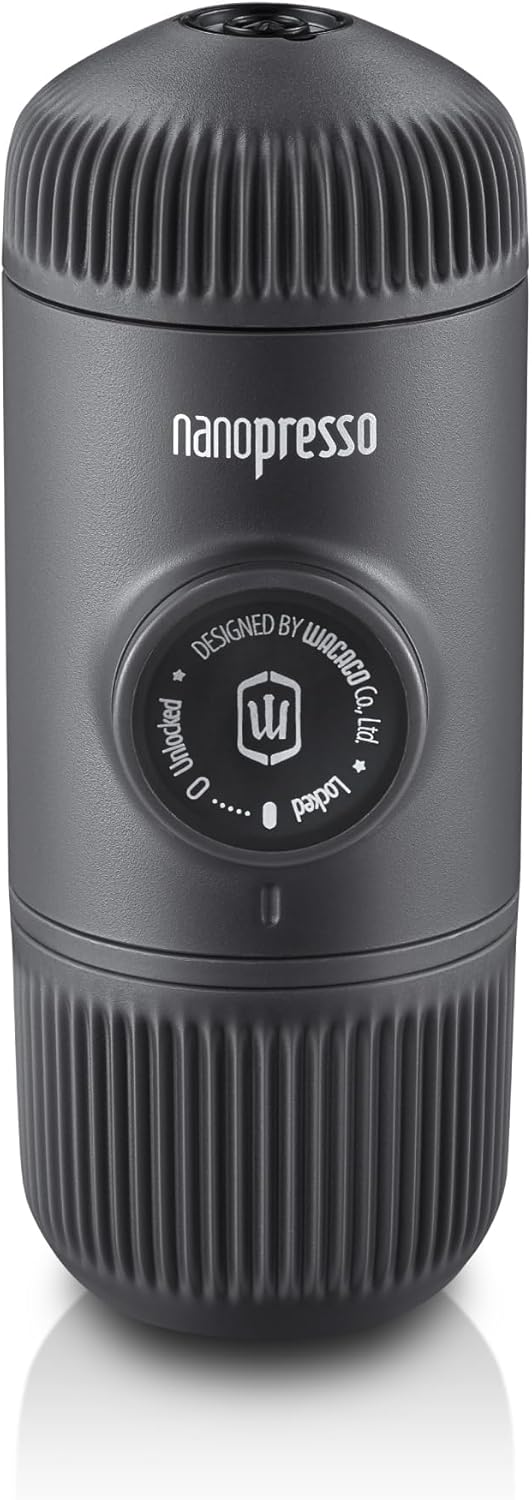
Wacaco Nanopresso Portable Espresso Maker
Wacaco
The Wacaco Nanopresso is the only true portable espresso maker that requires no electricity or heat source. Hand pump pressure creates 9 bars of force, enough to extract authentic espresso. At just 0.5 lbs and 6 inches tall, it fits in any backpack. Brew time is under two minutes. Perfect for campers who want café-quality espresso on the trail.
Pros
- True espresso quality
- Requires no heat source
- Ultra-compact and lightweight
- Fast brewing (1-2 minutes)
- Works at any altitude
Cons
- Requires hand pumping (tiring)
- Finicky grind size requirements
- High learning curve
The Wacaco Nanopresso is for espresso lovers willing to embrace the ritual. You fill the water chamber, pack finely ground coffee, attach the portafilter, and pump down the handle repeatedly to build pressure. This manual work takes effort, but the reward is authentic espresso with crema. The coffee shop quality is remarkable given the portable format. This maker shines on high-altitude camps where water boils at lower temperatures and traditional espresso makers struggle.
The downside is that it requires specific grinding (fine consistency matters), and the hand pumping is tiring if you want multiple shots. For solo campers or espresso enthusiasts, however, the Nanopresso opens up new brewing possibilities in the backcountry.
7. ESPRO P1 French Press — Best Full-Capacity Option

ESPRO P1 Pressure Tested French Press
ESPRO
The ESPRO P1 is a camping-friendly 12 oz French press made from borosilicate glass with a silicone grip. The dual micro-filter system produces cleaner coffee than traditional French presses while retaining full body. The heat-resistant design works with camping stoves, and the elegant aesthetic makes it feel like a real café experience in the wilderness.
Pros
- Cleaner cup than standard French press
- Beautiful design
- 12 oz capacity (good for one person)
- Durable borosilicate glass
- Heat-resistant silicone handle
Cons
- Glass can break if dropped
- Takes up more pack space
- Not as light as plastic alternatives
The ESPRO P1 bridges the gap between backpacking minimalism and home coffee ritual. The dual micro-filters trap most fine sediment, giving you cleaner coffee than a traditional French press while preserving the full body that coffee enthusiasts love. The 12 oz capacity is generous for one person or tight for a couple. The borosilicate glass construction is durable enough for car camping and modest backpacking trips.
This maker is ideal for campers who bring a camping stove and have some pack space. If you are hiking with a heavy pack, the GSI plastic press or AeroPress Go is better. But for base camp or car camping where quality matters, the ESPRO P1 delivers exceptional coffee.
8. Coleman Camping Coffee Maker — Best Group Brewing

Coleman Camping Percolator Coffee Maker
Coleman
The Coleman percolator is the classic camping coffee maker for groups. This 9-cup aluminum percolator sits on any heat source and uses heat circulation to continuously cycle water through grounds. The result is strong, reliable coffee that stays warm on the campfire. The no-frills aluminum construction has been camping standard for decades and will outlast most modern coffee makers.
Pros
- Brews 9 cups at once
- Works on any heat source
- Incredibly durable aluminum
- Coffee stays hot on low heat
- Affordable
Cons
- Can over-extract if left on heat too long
- Harder to dial in perfect coffee
- Bulky for backpacking
The Coleman percolator is the choice of group camping trips, campgrounds, and car camping adventures. It brews nine cups of coffee without fussing. Simply add water and grounds, place on heat, and wait for the water to percolate up through the grounds (you can see it working through the glass bubble on top). The longer it stays on heat, the stronger the coffee. Leave a percolator on low heat near the campfire and it will keep coffee warm all morning.
The main drawback is that it is easy to over-extract if you are not paying attention. But for groups of people camping together who want reliable, hot coffee without any special technique, the Coleman percolator is hard to beat. It is also nearly indestructible—these makers last decades.
9. Jetboil Flash Java Kit — Best All-in-One System
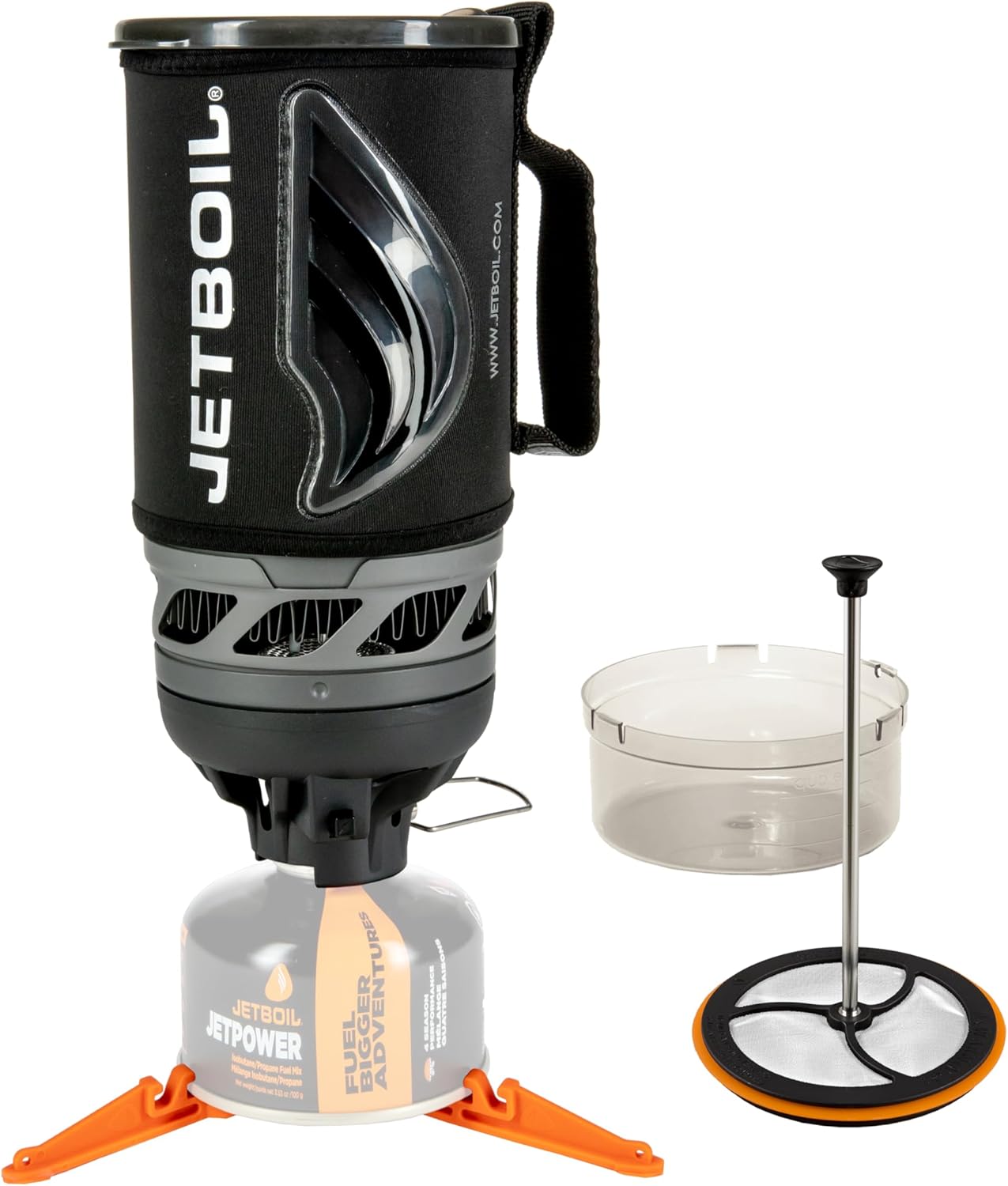
Jetboil Flash Java Kit
Jetboil
The Jetboil Flash Java Kit combines a high-performance camping stove with a coffee brewing basket. The integrated system boots water from cold to boiling in 100 seconds, then the coffee basket attaches directly to the pot for brewing. All you add is grounds and water. At 0.8 lbs and ultra-efficient, this is ideal for minimalist backpackers who want hot drinks fast.
Pros
- Ultra-fast water heating
- Integrated stove and coffee maker
- Extremely lightweight
- Fuel-efficient design
- Perfect for hot drinks fast
Cons
- High price at $130
- Limited to coffee brewing
- Requires fuel cartridges
The Jetboil Flash Java is the choice of speed-focused backpackers who do not want to mess with brewing complexity. The integrated stove-and-coffee system heats water incredibly fast, and you can brew drip coffee directly in the coffee basket. The result is efficiency and simplicity. This maker is perfect for alpine campers who want hot coffee before their summit push or trail runners who need caffeine fast.
The trade-off is that the brewing method is simpler (more like a drip basket than precision pour over), and the system is pricey. But if you are already buying a camping stove, the Java Kit adds coffee capability for minimal additional weight and cost.
Brewing Method Comparison: Choose Your Perfect Match
Pour Over (Stanley, Jetboil)
Best for: Simplicity and lightweight hiking. Pour over requires only hot water, grounds, and a filter. The resulting coffee is clean and bright. Trade-offs: single cup at a time, requires filters, takes 4-5 minutes. Ideal for: ultralight backpacking.
Immersion (AeroPress, French Press)
Best for: Full-bodied coffee and durability. Immersion methods steep grounds in hot water, then separate using a filter or press. Result is rich, full-flavored coffee. Trade-offs: slightly heavier, more cleanup, takes 4 minutes. Ideal for: all camping styles.
Pressure Brewing (Bialetti Moka, Wacaco Nanopresso)
Best for: Rich espresso-style coffee. Pressure forces hot water through grounds quickly, extracting intense flavor. Result is concentrated, bold coffee. Trade-offs: requires careful technique, higher learning curve. Ideal for: coffee enthusiasts and espresso lovers.
Percolation (Coleman)
Best for: Large groups and car camping. Percolators brew many cups at once and keep coffee warm. Result is strong, reliable coffee. Trade-offs: bulky, easy to over-extract, no precision. Ideal for: group camping trips.
Frequently Asked Questions
What is the best camping coffee maker for backpacking?
The AeroPress Go is the best overall choice. It is lightweight (0.3 lbs), compact, produces excellent coffee, and requires minimal cleanup. For ultralight enthusiasts, the Stanley pour over ($35, 2 oz) is cheaper and even lighter, though the taste difference is minimal.
Can I use regular coffee filters in a camping coffee maker?
Yes, most pour over and AeroPress-style makers accept standard coffee filters. French press makers do not use filters. Percolators use metal mesh that comes built-in. Always check compatibility before assuming filters fit.
How do I grind coffee without electricity when camping?
Bring a manual hand grinder like the Porlex or 1Zpresso. These compact grinders weigh under 0.5 lbs and produce consistent grinds anywhere. Alternatively, ask your local coffee shop to grind beans to your specifications before you leave home.
Does altitude affect coffee brewing?
Yes. Water boils at lower temperatures at altitude (about 1°F lower per 500 feet elevation gain). This means extraction happens slower. Compensate by using slightly finer grounds or increasing brew time by 30-60 seconds at high altitude.
How much coffee grounds should I use while camping?
A standard ratio is 1-2 tablespoons per cup of water, depending on how strong you like it. Use 1 tablespoon per 6 oz of water for lighter coffee, 2 tablespoons per 6 oz for stronger coffee. Experiment to find your preference.
Can I make camping coffee without hot water on a stove?
Yes. Cold brew is possible but takes 8-12 hours. For faster cold brewing, use coarse grounds steeped in cold water for 4 hours (tastes less bitter than hot brewed then cooled). Alternatively, bring instant coffee as emergency backup.