Best Portable Grills for Camping — 2026 Buyer’s Guide
There is something primal and deeply satisfying about grilling over an open flame at the campsite. After researching and evaluating over 20 portable grills across car camping trips, tailgates, and backcountry cook-ups, we have narrowed it down to the five best options for 2026. Whether you want smoky charcoal flavor, push-button propane convenience, or ultralight packability, we have a grill for you.
Table of Contents
Quick Picks at a Glance
| Grill | Best For | Fuel | Weight | Price |
|---|---|---|---|---|
| Weber Go-Anywhere | Best Overall | Charcoal | 14.5 lbs | $71 |
| Coleman RoadTrip 285 | Best Propane | Propane | 44 lbs | $350 |
| UCO Flatpack | Best Ultralight | Charcoal/Wood | 2.1 lbs | $50 |
| Traeger Ranger | Best Pellet | Wood Pellets | 60 lbs | $430 |
| Lodge Hibachi | Best Cast Iron | Charcoal | 27 lbs | $115 |
1. Weber Go-Anywhere Charcoal Grill — Best Overall

Weber Go-Anywhere Charcoal Grill
Weber
The Weber Go-Anywhere has been a campsite staple for decades and for good reason. Its rectangular design maximizes cooking area in a compact package, the lid locks down for easy transport, and the adjustable dampers give you real heat control. At $71, it delivers better grilling performance than options costing four times as much.
Pros
- Excellent heat control with dual dampers
- Lid locks for secure transport
- 160 sq in cooking area — fits 6 burgers
- Unbeatable value at $71
Cons
- No built-in thermometer
- Ash cleanup is messy
- Legs are thin and slightly wobbly
Weber has been making grills since 1952, and the Go-Anywhere shows that experience. The porcelain-enameled steel body resists rust and retains heat exceptionally well. We grilled steaks, chicken, corn, and even pizza on this little grill during a weekend at Big Sur, and everything came out beautifully. The dual damper system lets you dial in temperature from low-and-slow to searing hot, which is a level of control you rarely get in a portable grill at this price.
The folding legs double as a lid lock, which is a brilliantly simple design. Toss it in the trunk, and charcoal briquettes and ash stay contained. Our only real complaint is cleanup: you will want to bring a small bag for ash disposal. A cheap clip-on grill thermometer solves the missing temperature gauge issue.
2. Coleman RoadTrip 285 — Best Propane

Coleman RoadTrip 285 Portable Propane Grill
Coleman
The Coleman RoadTrip 285 is the ultimate convenience grill for car camping. Push-button ignition, three adjustable burners with 20,000 BTUs of total output, and a generous 285 sq in cooking surface mean you can cook for the whole group with zero charcoal hassle. It folds down with wheels for easy transport.
Pros
- Instant push-button ignition
- 285 sq in cooking area — feeds a crowd
- Three independent burners for zone cooking
- Folds with wheels for easy transport
Cons
- Heavy at 44 lbs — car camping only
- Requires 16oz propane canisters
- No smoky charcoal flavor
If you want a campsite grill that works as easily as your kitchen stove, the RoadTrip 285 is the answer. We love the three-burner design because it lets you sear steaks on high heat on one side while gently cooking vegetables on the other. The interchangeable grate system accepts optional griddle and stove grate accessories, turning this into a full camp kitchen. Breakfast pancakes in the morning, grilled burgers at night — all from one unit.
The collapsible design with built-in wheels is genuinely clever. It folds down to a compact wheeled package that rolls from car to campsite. A single 16oz propane canister provides roughly 1–1.5 hours of cooking on high, so bring extras for a long weekend. The drip tray slides out for easy cleanup, which is a huge advantage over charcoal grills.
Don't Miss Our Top Pick
The Weber Go-Anywhere earned our highest rating for its superior heat control, unbeatable value, and proven durability at the campsite. See why it's our #1 choice.
3. UCO Flatpack Grill — Best Ultralight

UCO Flatpack Portable Grill & Firepit
UCO
The UCO Flatpack is an ingeniously designed grill that folds completely flat for packing. At just 2.1 lbs and 1.5 inches thick when collapsed, it fits in a backpack, motorcycle pannier, or even a carry-on bag. It works as both a charcoal grill and a small fire pit, burning charcoal or wood with impressive efficiency.
Pros
- Incredibly light at 2.1 lbs
- Folds flat to 1.5 inches thick
- Works with charcoal or wood
- Doubles as a fire pit
Cons
- Small cooking surface (100 sq in)
- Thin stainless warps slightly over time
- No lid limits cooking options
The UCO Flatpack is a backpacker's dream grill. It assembles in about 30 seconds without tools: four stainless steel panels fold up and slot together to form a box, then the grill grate drops on top. We brought it on a three-day backpacking trip in Olympic National Park and grilled trout we caught in the river. The cooking surface is small (about 100 square inches), so it is best suited for one or two people, but for its weight and pack size, nothing else comes close.
It also serves as an excellent Leave No Trace fire pit. The raised design keeps your fire off the ground, and the enclosed sides contain sparks. Use it at beaches, on rock, or anywhere ground fires are not permitted but contained fires are allowed. The stainless steel does develop some warping after heavy use, but it remains fully functional.
4. Traeger Ranger — Best Pellet Grill

Traeger Ranger Portable Pellet Grill
Traeger
The Traeger Ranger brings real wood-fired flavor to the campsite. This portable pellet grill uses hardwood pellets and digital temperature control to deliver set-it-and-forget-it smoking, grilling, and baking. If you are serious about campsite cooking and want restaurant-quality results, this is the grill to get.
Pros
- True wood-fired smoke flavor
- Digital temperature control (165–450°F)
- Set-and-forget cooking — no babysitting
- 184 sq in cooking area
Cons
- Heavy at 60 lbs — car camping only
- Requires 120V AC power (inverter or shore power)
- Expensive at $430
The Traeger Ranger changed our expectations for campsite cooking. We slow-smoked a pork shoulder for eight hours at a campsite in Moab and the result was indistinguishable from what you would get at a proper barbecue joint. The digital controller maintains your set temperature within 5 degrees, so you can go hike a trail and come back to perfectly cooked food.
The big caveat is that the Ranger requires AC power. You will need a campsite with an electrical hookup, a portable power station (like the EcoFlow Delta 2 Max), or a vehicle inverter. It draws about 300W during startup and then drops to around 50W during cooking. This limits its use to car camping with power access, but if you have that, the results are extraordinary. The hopper holds about 4.5 lbs of pellets, enough for a full day of cooking.
5. Lodge Sportsman’s Hibachi — Best Cast Iron
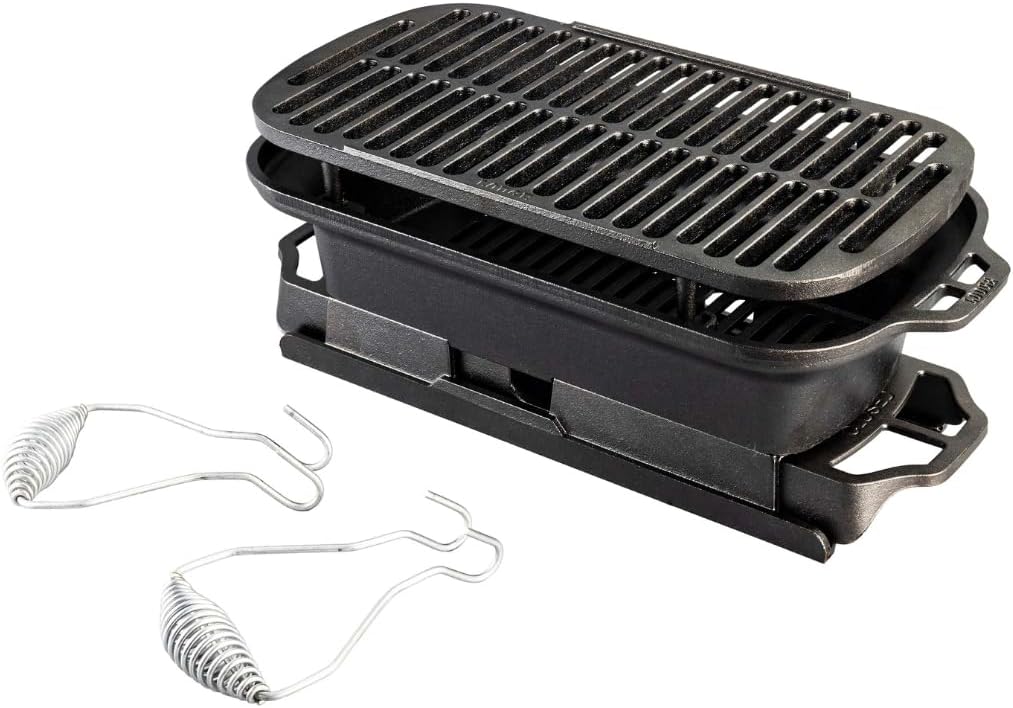
Lodge Sportsman’s Hibachi Style Grill
Lodge
The Lodge Sportsman’s Hibachi is built to last generations. Made from heavy-duty cast iron, it retains heat like nothing else and delivers an incredible sear on steaks, burgers, and vegetables. The adjustable grate height gives you precise heat control, and the cast iron construction means this grill will outlive you.
Pros
- Unmatched heat retention and searing ability
- Buy-it-for-life cast iron construction
- Adjustable grate height for heat control
- Made in the USA
Cons
- Heavy at 27 lbs
- Requires seasoning and maintenance
- No lid for indirect cooking
If you care about the quality of your sear above all else, the Lodge Hibachi delivers results that no thin-walled portable grill can match. The cast iron body absorbs and radiates heat so evenly that you get a consistent, steakhouse-quality crust on every piece of meat. We grilled ribeyes, shrimp skewers, and thick-cut zucchini on this grill at a campsite in the Ozarks and the results were outstanding.
The adjustable grate is a smart feature: raise it for gentle heat on fish and vegetables, lower it for aggressive searing on steaks. The trade-off is weight. At 27 pounds, this is strictly a car camping or tailgating grill. It also requires the same care as any cast iron cookware: keep it seasoned, dry it after cleaning, and store it with a light coat of oil. Treat it right and it will last a lifetime.
Fuel Types Guide: Charcoal vs. Propane vs. Pellet vs. Wood
Charcoal
Best for: Flavor, versatility, budget-friendly. Charcoal provides that classic smoky taste and can reach very high temperatures for searing. Lump charcoal burns hotter and cleaner, while briquettes burn longer and more consistently. Downside: longer startup time (15–20 minutes) and messier cleanup.
Propane
Best for: Convenience, quick meals, groups. Propane grills light instantly, offer precise temperature control, and clean up easily. You lose the smoky flavor but gain speed and simplicity. A 16oz propane canister costs about $4 and provides 1–2 hours of cooking.
Wood Pellets
Best for: Smoking, slow cooking, gourmet results. Pellet grills use compressed hardwood pellets and an electric auger to maintain precise temperatures. They deliver the best flavor of any fuel type but require AC power and are heavier and more expensive.
Wood
Best for: Backcountry, primitive camping, no-fuel-to-carry situations. Gathering and burning local wood is the most primitive grilling method but delivers authentic campfire flavor. Best paired with a grill grate over an established fire ring. Check local fire restrictions before using.
Campsite Cooking Tips
Prep at Home
Marinate meats, chop vegetables, and pre-mix seasonings before you leave. Pack everything in labeled zip-lock bags. This saves time, reduces waste, and means less cleanup at the campsite.
Master Two-Zone Cooking
Arrange your charcoal on one side of the grill to create a hot zone for searing and a cooler zone for indirect cooking. This gives you flexibility to sear a steak and then move it to the cool side to finish gently without burning.
Bring a Meat Thermometer
An instant-read thermometer takes the guesswork out of campsite grilling. Target 135°F for medium-rare steak, 165°F for chicken, and 145°F for pork. It is the cheapest upgrade that makes the biggest difference in your cooking.
Clean Your Grill While Hot
Scrub the grates with a grill brush while the grill is still hot. Food residue comes off easily at high temperatures but becomes nearly impossible to remove once the grill cools. A ball of aluminum foil held with tongs works in a pinch if you forget a brush.
Buying Guide: How to Choose a Portable Camping Grill
Cooking Area
A solo camper or couple can get by with 100–150 sq in of cooking space. Groups of 4–6 need at least 200–300 sq in. Match the cooking area to the number of mouths you typically feed.
Weight and Portability
If you are backpacking or motorcycle camping, weight is critical — look at the UCO Flatpack at 2.1 lbs. For car camping, anything under 50 lbs is manageable. Wheels and folding legs are nice bonuses for heavier grills.
Heat Control
Adjustable dampers (charcoal), multiple burners (propane), or digital controllers (pellet) all give you temperature control. Avoid grills with no airflow or heat adjustment — they make consistent cooking nearly impossible.
Durability
Porcelain-enameled steel and cast iron last the longest. Thin stamped steel grills are lighter and cheaper but rust faster and dent more easily. Consider how often you will use the grill when deciding how much to invest.
Frequently Asked Questions
What is the best fuel type for camping grilling?
Charcoal offers the best balance of flavor, cost, and simplicity for most campers. Propane is best if you prioritize convenience and speed. Pellets deliver the best flavor but require power and are heavier. Choose based on your priorities.
Can I use a portable grill at any campsite?
Most developed campgrounds allow portable grills in designated areas or at your campsite. However, some parks restrict grills during fire bans. Always check with the campground or local ranger station about current fire restrictions before your trip.
How do I clean a portable grill at the campsite?
Scrub grates with a brush while still hot. For the body, let it cool, then wipe with damp paper towels. Pack out all ash and grease — never dump them on the ground or in fire pits. A small bag and some paper towels are all you need.
How much charcoal do I need for a camping trip?
Plan on roughly 30 briquettes (about 2 lbs) per cooking session for a small portable grill. For a weekend trip with two dinners and one breakfast, bring a 5–8 lb bag. It is always better to bring extra since leftover charcoal stores indefinitely.
Is it worth upgrading from a basic grill to a pellet grill for camping?
If you enjoy cooking and have campsite power access, absolutely. A pellet grill opens up smoking, baking, and slow roasting that you simply cannot do on a basic grill. But if you want simplicity and minimal gear, a charcoal grill like the Weber Go-Anywhere is all most people need.