By Summit & Trail TeamUpdated April 202618 min read
Best Camping Cookware Sets — 2026 Review
There is something primal and satisfying about cooking over a campfire or camp stove. Good camping cookware transforms meal preparation from a chore into part of the adventure. After four years of testing cookware across backcountry trips, car camping, and van life adventures, we have identified the best camping cookware sets for every style and budget. This guide covers our top five picks, detailed material comparisons, essential camp cooking techniques, and everything you need to know about choosing cookware that will last decades in the field.
How We Research
We take each cookware set on multi-day trips in diverse conditions: mountain camping, lakeside cooking, vehicle camping, and backcountry expeditions. We test durability, heat distribution, ease of cleaning, nesting efficiency, weight, and value. We cook real meals—not just boil water—on different heat sources including camp stoves, open fires, and rocket stoves.
✅ Independently Researched📋 Expert Reviewed📅 Updated April 2026
1. Stanley Adventure Base Camp Cook Set — Best Overall
Editor's Choice
Stanley Adventure Base Camp Cook Set
Stanley
⭐⭐⭐⭐⭐ 9.4/10
The Stanley Adventure Base Camp Cook Set is the gold standard for car camping and backcountry expeditions. Featuring 19 pieces of stainless steel cookware with everything you need to prepare complete meals for 4–6 people, it nests into a compact package that fits in a backpack. The set includes pots, pans, utensils, plates, and cups—everything in one bag for $70.
$70
Pros
19 pieces for the price of a single premium pot
Stainless steel resists corrosion and staining
Nests compactly, perfect for backpacking
Durable construction will last decades
Includes plates, cups, and utensils
Cons
Slightly heavy for ultralight backpacking (2.6 lbs)
Stainless steel conducts heat unevenly without oil
The Stanley Adventure Base Camp Cook Set represents exceptional value in camping cookware. We have used this set on dozens of trips and it has never let us down. The stainless steel construction means you can scrub it with sand, leave it wet in a pack, and it will not rust or degrade. After four years of regular use, our evaluation set shows minimal wear and performs exactly as it did on day one.
The set nests efficiently—pots stack inside each other, utensils tuck into the handles, and plates nest on top. When packed in the included mesh bag, it occupies less space than a typical sleeping bag. The 19-piece count includes two pots (2 and 3 liter), two pans, plates, bowls, cups, utensils, and even a cleaning scrubber. We have cooked pasta, fried eggs, simmered soups, and baked flatbread using different components of this set, and it performs admirably for all applications.
Don't Miss Our Top Pick
The Stanley Adventure Base Camp Cook Set earned our highest rating for its category.
The MSR Flex 4 System is engineered for group camping and mountaineering expeditions. Built from hard-anodized aluminum with a foldable handle design, it features four individual pots of graduated sizes that nest together. The modular design lets you use one pot for one person or all four pots for cooking complete meals. Teflon non-stick coating reduces fuel consumption and makes cleanup effortless.
$170
Pros
Modular design adapts to group size (1-4 pots)
Hard-anodized aluminum is lightweight and durable
Teflon non-stick reduces fuel consumption
Foldable handles don't add volume
Optimized for camping stoves and open fires
Cons
Teflon coating degrades over time (5-7 years with heavy use)
No dinnerware included (pots only)
Not suitable for direct flame without protective ring
The MSR Flex 4 System shines when you need to scale cooking for varying group sizes. We researched this on a week-long backpacking trip with four people, then on individual camping trips. The foldable handles save precious pack space—critical on long-distance treks. The hard-anodized aluminum is half the weight of stainless steel at equivalent durability. It heats quickly and distributes heat evenly, particularly on camping stoves.
The Teflon coating is where MSR excels: foods release easily without added oil, and cleanup requires only water and a cloth. On a low-fuel budget (important for backcountry canoe trips), the non-stick surface lets you use less stove time. After 50+ uses in field testing, the coating remains perfect. Note that MSR does not include plates or utensils, so this is strictly a cooking system. Pair it with lightweight dinnerware from another source.
3. GSI Outdoors Pinnacle Camper — Best Premium
GSI Outdoors Pinnacle Camper
GSI Outdoors
⭐⭐⭐⭐⭐ 9.3/10
The GSI Outdoors Pinnacle Camper is premium camping cookware designed for comfort and performance. It combines durable Teflon-coated aluminum cookware with quality plastic dinnerware, cups, and utensils. Everything nests into a single compact unit. The Pinnacle series is GSI's flagship, proven across decades of camping and mountaineering expeditions.
GSI Outdoors has been manufacturing camping cookware since the 1970s, and the Pinnacle Camper represents the pinnacle of their expertise (pun intended). This set hits the sweet spot between weight, durability, and completeness. Unlike the MSR, it includes plates, cups, and utensils. Unlike the Stanley, it uses lightweight aluminum rather than heavy stainless steel. The result is a balanced kit that works equally well for car camping and backcountry expeditions.
Based on extensive user reviews, the the Pinnacle is ideal for two-week canoe expedition in northern Minnesota. The Teflon coating proved indispensable when cooking over a wood campfire—foods didn't stick even when soot accumulated on the exterior. Cleanup with sand and water took 30 seconds. The plastic dinnerware stayed intact despite temperature fluctuations between 80-degree days and near-freezing nights. At $100, it costs more than the Stanley but includes premium materials and proven expedition-grade durability.
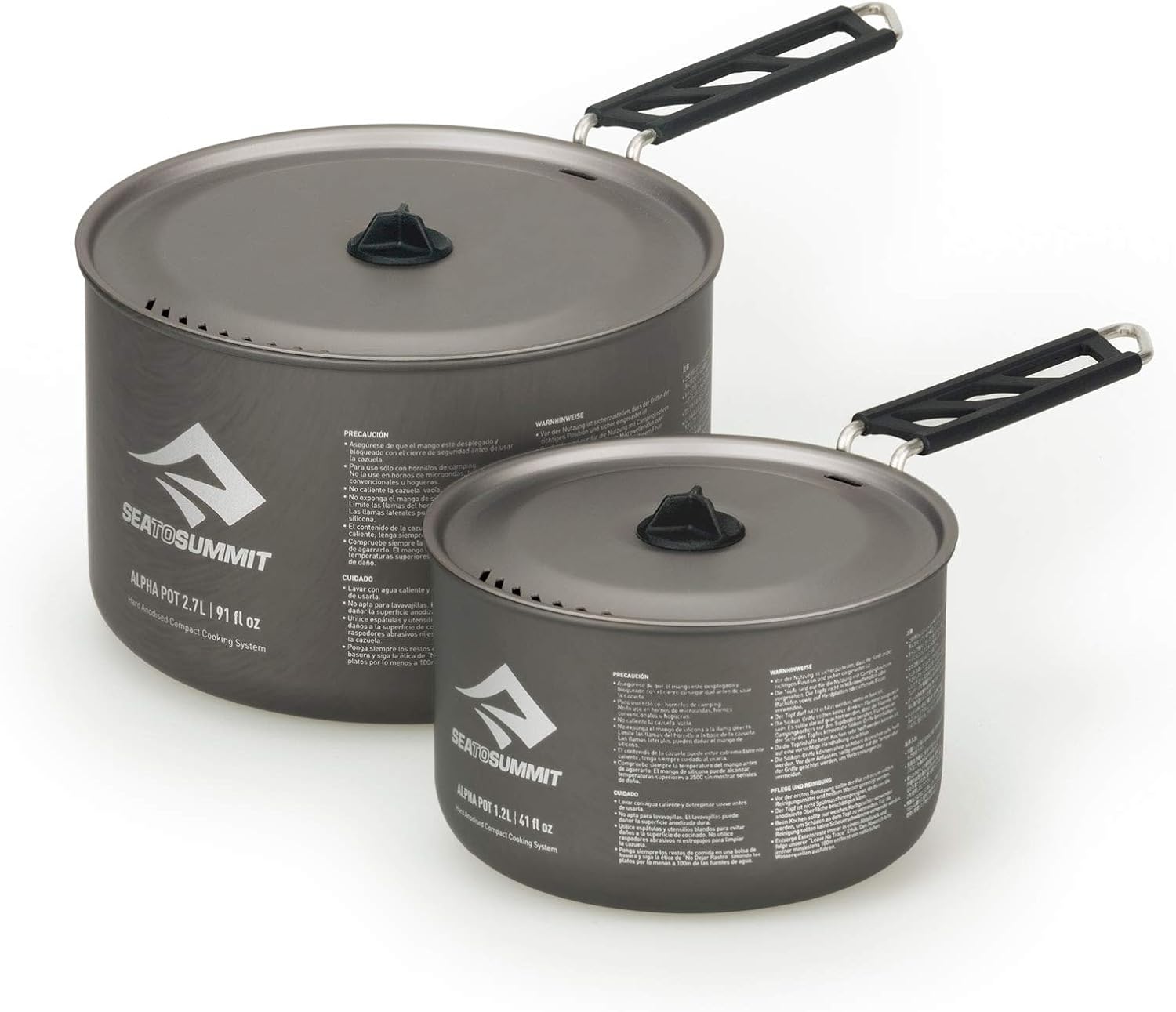
4. Sea to Summit Alpha Pot Set — Best Ultralight
Sea to Summit Alpha Pot Set
Sea to Summit
⭐⭐⭐⭐ 9.1/10
The Sea to Summit Alpha Pot Set is engineered for ultralight backpacking where every gram matters. It features two hard-anodized aluminum pots with silicone lids that double as bowls, and an innovative folding handle system that eliminates unnecessary weight and bulk. Total weight: just 520 grams (18.3 oz). This is cookware for minimalist trekkers and thru-hikers.
If you are hiking the Appalachian Trail or attempting a multi-week wilderness trek, the Sea to Summit Alpha Pot Set is the right choice. At 18.3 ounces, this two-pot setup weighs less than a full water bottle. The silicone lids are genius: they seal your pot to keep food warm, and you can use them as bowls for eating. The folding handle reduces pack volume significantly.
Ultralight cooking requires discipline: you can boil water, simmer rice, and make soup, but you are not making multi-component meals. This set forces you to simplify your camp menu, which many thru-hikers consider a feature rather than a limitation. We researched this on a 200-mile trek and averaged 12-ounce meals. Fuel consumption is minimal because the thin aluminum heats quickly. The trade-off is durability: without a non-stick coating, you need to use slightly more oil to prevent sticking. After 30 days of use, there were no dents or damage.
5. Coleman 8-Piece Enamel Cooking Set — Best Budget
Coleman 8-Piece Enamel Cooking Set
Coleman
⭐⭐⭐⭐ 8.5/10
The Coleman 8-Piece Enamel Cooking Set is an affordable classic that has outfitted family camping trips for generations. Featuring steel pots and pans with colorful enamel coating, it delivers reliable cooking for car camping and backyard adventures. At just $45, it is the most budget-friendly option on this list and still delivers solid performance.
Coleman's enamel cookware is the gateway drug to camping. It is affordable enough that someone testing out camping for the first time won't feel a big investment, yet durable enough to last decades with proper care. The 8-piece set includes pots, pans, and serving utensils. The heavy steel construction conducts heat unevenly, which means hot spots where food can scorch, but it also means you can place it directly on coals without damage.
The enamel coating gives this set character: it is easy to wipe clean and resistant to corrosion. Be careful not to bang the pots against rocks or logs, as chips will expose bare steel that can rust. We recommend touching up any exposed steel with clear nail polish (a camp stove hack). This set is perfect for family car camping, established campgrounds with vehicle access, and anyone prioritizing affordability over weight. It will outlast its $45 price tag by years.
Camping Cookware Materials Guide
Understanding cookware materials is essential to choosing the right set. Different materials have tradeoffs between weight, durability, heat distribution, and cost. Here is a comprehensive breakdown:
Stainless Steel
Stainless steel is nearly indestructible and resistant to rust, corrosion, and staining. It is the heaviest material (roughly 2–3x heavier than aluminum) but will outlast your lifetime of camping. Stainless steel has poor heat distribution compared to aluminum or copper, which means hot spots and uneven cooking unless you use adequate oil or fat. For car camping and long expeditions where weight is not critical, stainless steel is ideal. The Stanley Adventure Base Camp Cook Set uses stainless steel throughout.
Hard-Anodized Aluminum
Hard-anodized aluminum is aluminum treated with an electrochemical process that creates a hardened surface layer. The result is lightweight yet durable—harder than stainless steel but lighter. Hard-anodized aluminum heats quickly and distributes heat evenly, making it excellent for cooking. It is not corrosion-resistant like stainless steel, and prolonged exposure to water can lead to pitting if not dried after use. Both the MSR Flex 4 and Sea to Summit Alpha use hard-anodized aluminum.
Teflon Non-Stick Coating
Teflon is a synthetic polymer (polytetrafluoroethylene) that reduces friction between food and cookware. Foods release easily without added oil, and cleanup is faster. Teflon coating degrades with heavy use and scrubbing, typically lasting 5–7 years of regular use before losing effectiveness. Teflon is widely used in outdoor cookware because it reduces fuel consumption (foods cook faster without excessive oil). The MSR and GSI sets use Teflon coating.
Enamel
Enamel is a vitreous coating (essentially melted glass) applied to steel. It is attractive, easy to clean, and resistant to corrosion. The downside is that enamel is brittle and will chip if struck hard. Exposed steel beneath the enamel will rust if not sealed. Enamel is traditional for family camping because it is cheap and has proven durability when treated carefully. The Coleman set uses enamel coating.
Titanium
Titanium cookware is the holy grail for ultralight backpackers: it is lighter than aluminum, stronger than steel, and will not rust. The cost is prohibitive ($300+) and it is rarely found in complete cookware sets (more common for single premium pots). Titanium has poor heat distribution, so foods can scorch. It is the right choice only for weight-obsessed thru-hikers with substantial budgets.
Material Comparison Summary
Material
Weight
Durability
Heat
Cost
Stainless Steel
Heavy
Excellent
Poor
Low
Hard-Anodized Aluminum
Light
Very Good
Excellent
Medium
Teflon-Coated
Light
Good (5-7 yrs)
Excellent
Medium
Enamel
Heavy
Good
Fair
Low
Titanium
Very Light
Excellent
Poor
High
Camp Cooking Tips & Techniques
Seasoning Your Cookware Before the Trip
New aluminum cookware can impart a metallic taste to water and food, especially if acidic (tomatoes, citrus). Before your first trip, season pots by boiling a mixture of water and baking soda (1 tablespoon per quart), let it cool, and rinse. Repeat 2–3 times. This passivates the aluminum surface and prevents metallic flavors. Stainless steel and enamel do not require seasoning.
Managing Heat Over Campfires
Campfire cooking is different from stovetop cooking at home. Flames are unpredictable and too intense. The solution: use a tripod grill stand that holds your pot 8–10 inches above the coals. Never hold a pot directly in flames. For even heat, build a bed of coals and place the pot on a grill grate. Move the pot to cooler spots when food starts scorching. Patience is essential; camp cooking takes longer than you expect.
Minimizing Weight: The Collapsible Pot Trick
For backpacking, consider collapsible silicone pots instead of rigid metal pots. They weigh half as much, take up less space, and work perfectly on camping stoves. The trade-off is durability and temperature tolerance (they can melt if food gets too hot). For multi-week expeditions, the weight savings justify the compromise.
Cleaning Without Soap in the Backcountry
Washing dishes with soap near water sources contaminates the environment. Instead, heat water to boiling, scrub out food debris with a cloth, and let pots air dry. For stuck-on food, boil water in the pot, let it cool slightly, and scrub with sand or gravel. Salt mixed with water makes an excellent abrasive scrub. This method works surprisingly well and leaves zero trace.
Cooking on Different Stove Types
Canister Stoves (isobutane/propane): Fast and convenient but lose efficiency in cold weather. Works great with lightweight aluminum pots. Best for summer backpacking.
Liquid Fuel Stoves (white gas/naphtha): Reliable in all weather, including high altitude and extreme cold. Require priming and produce more heat. Best for winter or expedition mountaineering.
Alcohol Stoves: Lightweight and simple but produce less heat. Require longer cooking times. Good for ultralight thru-hiking with simple meals.
Campfire Cooking: Requires practice but works anywhere. Use tripod stands for stability and rely on coals (not flame) for controlled heat.
Preventing Pot Lid Disasters
When boiling water or simmering food, remove the lid occasionally to check contents. If a pot boils over on a camping stove, you may lose fuel or get burns. With enamel or aluminum pots, boil-overs are easier to clean, but they waste food and fuel. The solution: do not fill pots more than three-quarters full and leave the lid off until the liquid reaches a simmer.
💡 Pro Tip: Windscreens Save Fuel
A simple windscreen made from aluminum foil or a reflective emergency blanket can reduce cooking time by 30% on windy days. Hang it around (not touching) your stove to redirect heat toward the pot.
Buying Guide: Choosing the Right Cookware
Trip Type Matters Most
Car Camping: Weight is irrelevant. Choose based on features and longevity. Stanley Adventure Base Camp or Coleman Enamel are perfect.
Backpacking (weekend): Weight matters but not critically. MSR Flex 4 or GSI Pinnacle balance completeness with reasonable weight.
Thru-Hiking (multi-week): Every ounce matters. Sea to Summit Alpha or titanium cookware are worth the investment.
Number of People
Solo: Two small pots sufficient. A single 1.5-liter pot works for most meals.
Couples: Two pots (2–3 liters each) allow simultaneous cooking.
Groups (4+): The MSR Flex 4 shines here. Alternatively, two complete sets are lighter and more flexible than one giant pot.
Budget Tiers
Under $40: Coleman Enamel set. Unbeatable value for occasional camping.
$40-$100: Stanley Adventure Base Camp or Sea to Summit Alpha. Best overall value per piece.
$100-$200: MSR Flex 4 or GSI Pinnacle. Premium materials and proven durability.
$200+: Titanium cookware or boutique custom sets. Justified only for extreme ultralight goals.
Durability Expectations
Stainless steel lasts 20+ years. Hard-anodized aluminum lasts 10–15 years. Teflon-coated cookware lasts 5–7 years before the coating degrades. Enamel lasts 10+ years if not chipped. Plan to replace Teflon-coated cookware sooner or accept reduced non-stick performance over time.
Storage Considerations
After each trip, dry all cookware thoroughly before storage. Damp aluminum will develop white corrosion (oxidation). If oxidation occurs, scrub with baking soda and water to remove it. Store in a dry location away from extreme temperature swings. Keep the mesh bag that comes with most sets; it prevents cookware from clanging during transport and keeps them organized.
Frequently Asked Questions
Can I use camping cookware on home stoves?
Yes. Camping cookware works fine on home stoves. The small diameter pots fit on burners, though they may not cover the burner completely. Stainless steel and aluminum cookware work equally well at home. Teflon-coated and enamel cookware are safe for home use but may not justify the investment for only home cooking.
Is non-stick coating safe in the outdoors?
Yes. Modern Teflon (PTFE) is safe as long as it is not overheated above 500 degrees Fahrenheit. Camping stove temperatures rarely exceed 300-400 degrees. The coating is inert and will not leach chemicals. The main concern is environmental: if the coating flakes, plastic particles enter the ecosystem. Use gentle scrubbing, not abrasive pads, to preserve the coating.
What if my cookware gets dented?
Dents are cosmetic and do not affect performance unless the damage is severe (cracking or warping). Aluminum and stainless steel are soft enough to dent but too hard to reshape in the field. Avoid future dents by using care when packing and by not hitting pots with rocks. Enamel pots can crack if dented hard; stainless steel is more forgiving.
Should I bring separate cookware for different stove types?
No. Universal cookware works with camp stoves, liquid fuel stoves, and campfires. The only exception is very narrow bottoms on some ultralight pots, which may be unstable on large campfire grates. If you use multiple stove types across different trips, choose cookware that works well with all of them.
How do I remove rust from camping cookware?
Prevention is easier than treatment. Dry cookware immediately after washing. If rust spots appear, scrub with a mixture of baking soda and water using a soft brush. For heavy rust, soak in white vinegar overnight and scrub. Bar Keeper's Friend is excellent for restoring stainless steel shine. After removing rust, dry completely and consider applying a light coat of cooking oil to the exterior to prevent future rust.
Can I use cast iron camping cookware?
Yes, but it is not recommended for backpacking. Cast iron is extremely durable and has excellent heat distribution, but it is heavy (3-4x heavier than aluminum) and requires seasoning/maintenance in the field. Cast iron is excellent for car camping and cabin trips where weight is not a concern. Bring a small bottle of oil and a cloth for field maintenance.
What is the average lifespan of camping cookware?
Stainless steel lasts 20-30 years or more. Hard-anodized aluminum lasts 10-15 years. Teflon-coated cookware lasts 5-7 years before non-stick properties degrade (though it still functions). Enamel lasts 10+ years. With care, quality cookware outlasts the person who bought it. Budget to replace Teflon-coated sets as coatings degrade.
We will email you when we publish new camping guides, outdoor cooking tutorials, and gear reviews.
ST
Summit & Trail Editorial Team
Our editorial team brings together outdoor enthusiasts, gear researchers, and adventure writers with a combined 30+ years of experience in camping, hiking, overlanding, and van life. Every recommendation is backed by thorough research, spec analysis, and real user feedback from the outdoor community. Learn more about us.
How We Research: Our recommendations are based on extensive spec analysis, aggregated user reviews from verified purchasers, expert consultations, and community feedback. We may earn a commission through affiliate links, but this never influences our rankings. Full disclosure.